

Repeat attendance is not created by great content alone.
Your speakers delivered, the room was full, and the feedback form came back glowing. Then registration opened for the next edition and half the room did not return.
Most organizers read that as a content problem and book bigger names. It is usually a relationship problem, and it is fixable.
The Feedback Was Glowing. The Rebooking Was Not.
§ 01 · DiagnosisThere is a gap between how an event feels in the moment and what it leaves behind. A great keynote produces a strong feeling that fades within a week. A great conversation produces a contact, a follow-up, and a reason to come back to the room where it happened.
When you look closely at events that struggle with event retention, the same pattern shows up. Attendees enjoyed the day, but they left with nothing that survived it. Here is what that looks like in practice:
- High satisfaction scores paired with low return registrations
- Attendees who remember the sessions but not a single person they met
- Networking breaks spent on a phone rather than in a conversation
- No reason to return beyond the agenda, which any competitor can copy
Content is replicable. A relationship formed in your room is not. That is the asset you are actually competing on.

Relationships, Not Keynotes, Drive Event Retention
§ 02 · The CauseAsk anyone why they return to the same conference year after year and you rarely hear a session title. You hear a name. People come back to rooms where they belong to something, and belonging is built out of specific, remembered interactions.
Sociologists have studied this for decades under the idea of interpersonal ties, which shows that the loose connections we form outside our close circles carry the most new opportunity. Events are one of the few places those ties form at speed. When an event creates them reliably, attendance stops being a decision and becomes a habit.
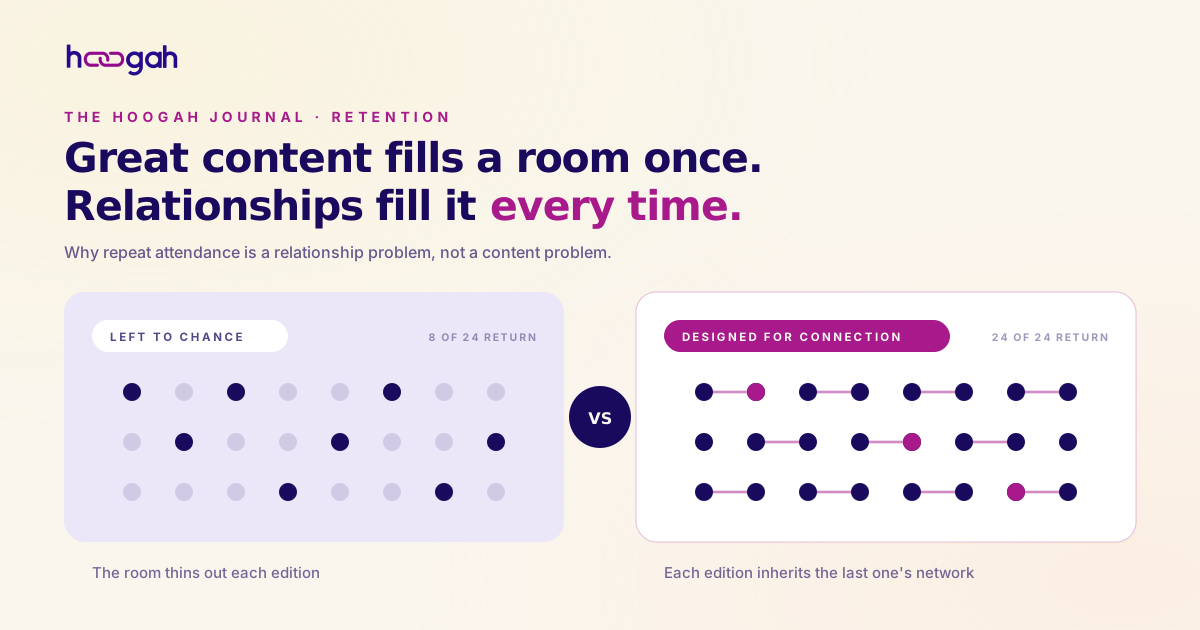
The retention math is simple:
- Zero connections
An attendee with no contacts from the room has no cost to skipping next year.
- Two or three real contacts
An attendee with people to see again has a reason to return.
- A client, a hire, or a partner
An attendee who found one will book before you ask.
- Lower acquisition cost
Each returning attendee costs less to win than a new one.
What Recurring Events Do Differently
§ 03 · The PlaybookRecurring events that hold their audience treat networking as a designed part of the program, not a coffee break with a hopeful label. They know that a room full of strangers will not solve itself in twenty minutes.
The organizers who get this right build in a few things every time:
- Intent captured early
You know what each person came to find before they arrive.
- Specific introductions
A name, a reason, a time, and a place, instead of a general invitation to mingle.
- Formats that match the goal
A one-on-one meeting, a small huddle, or a community station, chosen to fit what people came for.
- A follow-up loop
Contacts exchanged on the day survive the trip home.
- Evidence
You can prove connection happened rather than guess at it.
Do this once and the event improves. Do it across a series and the effect compounds, because each edition inherits a network that already knows itself. That is the quiet advantage behind every recurring event with a waiting list.
"Great content fills a room once. Relationships fill it every time."
Connection by Design, Vol. 01Why This Changes Your Next Event
§ 05 · HoogahThis is where Hoogah fits. Setup takes under ten minutes from any browser. You create the matching questions, attendees answer in about ninety seconds, and Hoogah pairs them based on what they actually came for. During the event you can see connections forming and steer the room in real time, and afterwards you get the data that shows what the day produced. You can see the full flow on how it works, and the formats it runs across on use cases.
When people leave with relationships instead of a tote bag, your next event sells itself:
- Attendees return because the room holds people they want to see again
- Sponsors renew because you can show connection data, not just headcount
- Word of mouth does the marketing you were paying for
- Your event becomes a community, which no competitor can copy from a schedule
Great content fills a room once. Relationships fill it every time.
Two follow-ons from here: how to lift repeat attendance without raising spend for the practical moves, and why some events become communities for what happens when the relationships hold across editions.
Frequently Asked Questions
§ 06 · FAQWhy do attendees give great feedback but not return?
Because satisfaction and retention are different things. A good session creates a feeling that fades, while a good conversation creates a contact and a reason to come back. If nobody left with a relationship, there is nothing pulling them to the next edition.
Is repeat attendance really driven by networking rather than content?
Content gets people to try your event once. Relationships are what make attendance a habit. Most organizers who fix retention find the change came from the room, not the lineup.
How do I improve event retention for a recurring event?
Capture attendee intent before the event, make specific introductions instead of open networking breaks, match the format to the goal, and give people a way to keep the contacts they make. Repeat that across editions and the network compounds.
Can I measure whether connections actually happened?
Yes. Hoogah tracks the introductions made and the engagement across the session, so you can show sponsors and leadership real outcomes instead of attendance numbers alone.
What kinds of events does this work for?
Conferences, corporate offsites, founder networks, universities, community meetups, and any recurring event where people returning matters more than people showing up once.
- Interpersonal ties, on how loose connections carry new opportunity