
The survey arrives two weeks late and tells you about a day you can no longer change.
Post-event reporting is the standard. Run the event, send the form, wait for a response rate somewhere near twenty percent, then read a summary of what a self-selecting minority remembers about something that happened a fortnight ago.
It is not useless. It is just the slowest possible way to learn something you could have known at eleven in the morning.
Every Useful Decision Has Already Expired
§ 01 · DiagnosisThe decisions that improve an event are small, cheap, and time-limited. Move a session. Extend a break that is working. Cut a format that is not. Introduce the person who has been standing alone since lunch.
Every one of those has a deadline measured in minutes, and post-event data misses all of them:
- You learn the afternoon track was oversubscribed after everyone has gone home
- You learn a session ran flat from a comment box, not from the empty seats you could have seen
- You learn some attendees felt isolated, with no way of knowing which ones
- You learn the sponsor was disappointed during the renewal call
All of it is accurate. None of it is actionable.
Why Speed Changes What Data Is Worth
§ 02 · The CauseAnyone who has to make decisions under time pressure ends up running some version of an OODA loop: observe, orient, decide, act, then observe again. The tighter the loop, the better the outcome. Post-event surveys stretch that loop to a year, because the next chance to act is the next edition.
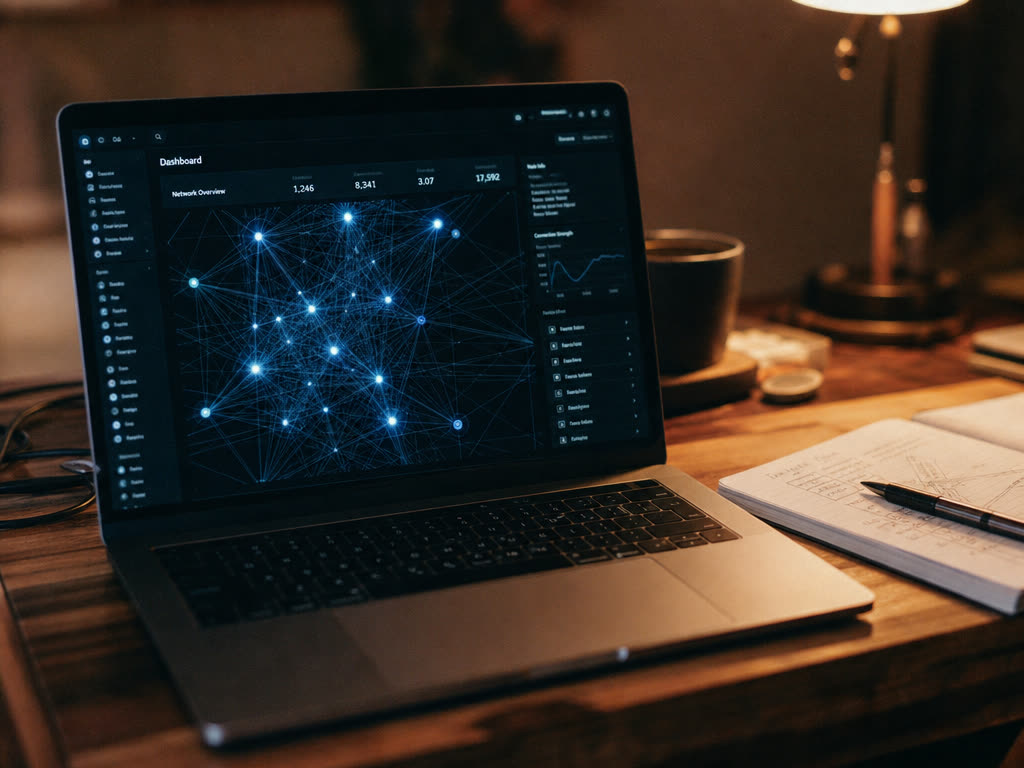
Real-time event analytics shorten the loop to the length of a coffee break. That is the whole argument.
- Observation becomes continuous
Check-ins, session movement and connections update while the event runs, rather than being reconstructed afterwards.
- Orientation gets cheaper
You are reading what is happening, not interpreting what someone remembers about it.
- Decisions stay small
A room swap at the break is a minor adjustment. The same problem discovered later becomes next year's redesign.
- Action has somewhere to land
There are still hours left in the day, which is the one thing post-event data can never offer.
What to Watch While the Event Is Running
§ 03 · The PlaybookA live dashboard is only worth having if you have decided what you will do with each number:
- Checked in against registered
Your real headcount. Every room plan and group assignment should be built from this, not from the ticket list.
- Session movement
Which rooms are filling and which are emptying, in time to swap them at the break.
- Connections per attendee
The closest number to why people bought a ticket, and the one most events never measure.
- Attendees at zero
Anyone who has met nobody by mid-afternoon. This is the single most valuable alert an organizer can have.
- Sponsor interactions
Qualified conversations as they happen, so the sponsor briefing can be delivered the same day.
Five numbers, each attached to a decision you can make before the event ends. For the fuller breakdown of what belongs on that screen and why registration data does not cover it, see what every event organizer should be tracking live.
"Data you receive after the event is a history lesson. Data you receive during it is a steering wheel."
Connection by Design, Vol. 01Where the Live View Comes From
§ 05 · HoogahThe reason organizers rely on surveys is not preference. Tracking who has connected with whom across several hundred people, during the day you are also hosting, is not something a clipboard can do.
That is where Hoogah fits. Attendees answer a short set of questions at signup, Hoogah makes the introductions and records which ones turned into conversations, and the organizer view shows check-ins, connections and anyone still at zero while there is time to intervene. The full flow is on how it works, and the formats are on use cases.
What changes on the day:
- You act on the second half of the event using data from the first
- Isolated attendees get found in hour three instead of appearing in next year's churn
- Sponsors get numbers before they leave the building
- The post-event report confirms what you already handled rather than revealing it
The best time to learn an event is not working is while it is still running.
Frequently Asked Questions
§ 06 · FAQWhat are real-time event analytics?
Data collected and surfaced while the event is running, such as live check-ins, session movement and connections made, so an organizer can act on it during the day rather than reviewing it afterwards.
Are post-event surveys still worth sending?
Yes, for sentiment and for things only an attendee can tell you. They should not be your only source, because low response rates and two weeks of hindsight make them a poor operational tool.
What is the most useful live metric?
Attendees with zero connections. It identifies the people most likely not to return, and it is one of the few problems you can still solve while they are in the building.
Does this require attendees to install an app?
It should not. Anything requiring a download loses a large share of the room before the event starts, which defeats the point of measuring the room.
How small does an event have to be before this stops mattering?
Around fifty people, where a good host can keep the room in their head. Above that, the possible pairings grow faster than anyone can track, and the gaps stop being visible from the front.
- The OODA loop, on why shortening the gap between observing and acting improves decisions