
You spend nine months planning an event and go blind the moment it starts.
Registration tells you who bought a ticket. Badge scans tell you who walked through the door. After that, most organizers are running on instinct: a glance across the room, a sense that the third session felt flat, a hallway comment from someone who seemed happy.
Then the survey arrives two weeks later and tells you what went wrong on a day you can no longer change.
Registration Data Tells You Almost Nothing
§ 01 · DiagnosisEvery number an organizer has before the doors open describes intent, not behavior. Someone registered. Someone paid. Someone selected a track. None of it survives contact with the actual day.
The gap shows up in familiar ways:
- A session lists 200 registrations and seats 60 people
- The networking block is on the schedule but half the room leaves early
- Two attendees who should obviously meet spend the day ten feet apart
- A sponsor asks how their booth performed and the honest answer is a shrug
By the time the data arrives, the event is a memory.
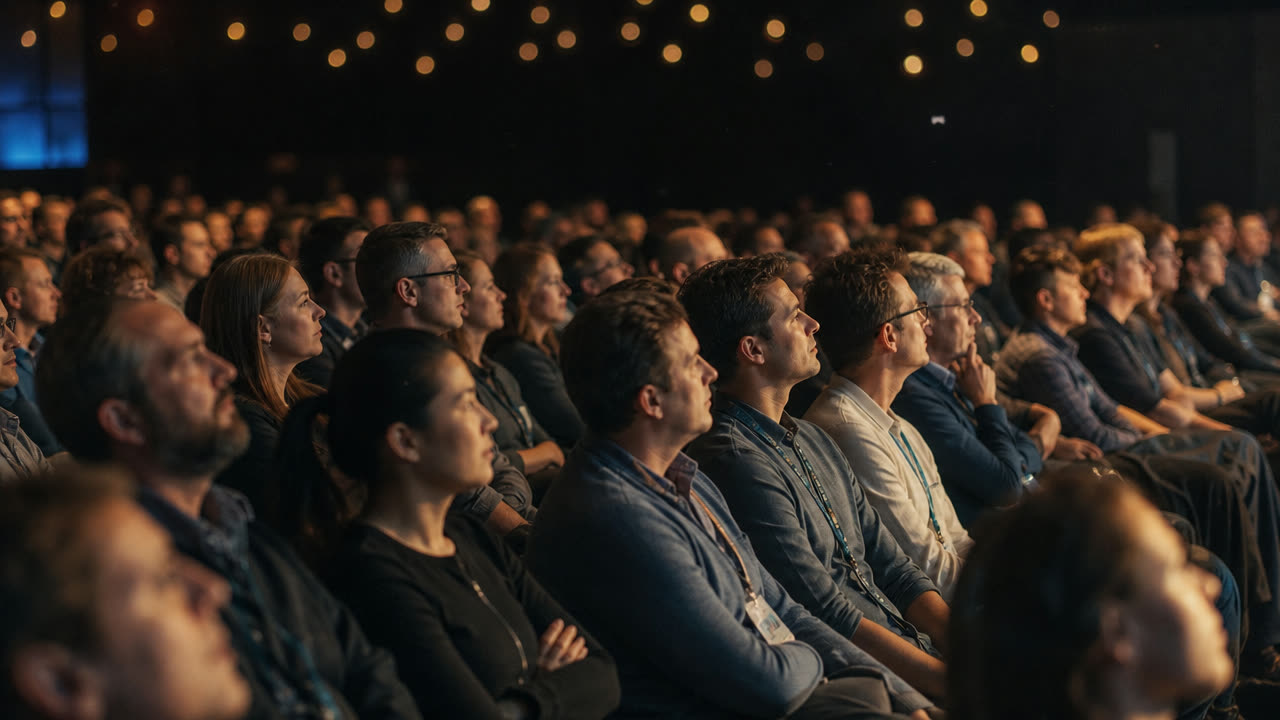
What a Live Event Dashboard Should Actually Show
§ 02 · The CauseMost event software reports backwards. It collects, then summarizes, then delivers a deck. That pattern comes from finance, not from operations. Anyone running a live system, from a factory floor to an airline, works from real-time business intelligence instead, because a number you cannot act on is trivia.
An organizer dashboard earns its place when it answers four questions while the event is still running:
- Who is actually here
Live check-in against registration, so your room counts reflect the building rather than the spreadsheet.
- Where attention is going
Which sessions are filling, which are emptying, and which one is about to overflow.
- Who has met whom
Introductions made, conversations started, contacts exchanged. The reason most people bought a ticket.
- Who is stranded
The attendees who have not spoken to anyone yet, while you still have hours to fix it.
Visibility Only Matters If You Can Act On It
§ 03 · The PlaybookA dashboard nobody acts on is a screensaver. The organizers who get value from live event data have decided in advance what they will do about it:
- Move the room
When a session is at capacity and another is at a third, swap the rooms at the break instead of apologizing afterwards.
- Rescue the stranded
Attendees with zero connections by mid-afternoon get a targeted introduction, not a survey question about whether they felt welcome.
- Rebuild the next round
Use who actually showed up to build the following session, rather than the groups you planned last Tuesday.
- Brief sponsors the same day
Hand them interaction numbers before they leave the venue, while the impression is still fresh.
- Kill what is not working
A format that produced nothing in round one does not deserve round two.
Every one of those decisions has a deadline of about ninety minutes. On why that deadline decides the value of the data, see how real-time event analytics change what an organizer can do.
"A post-event report tells you what happened. A live dashboard lets you change it. Only one of those is worth paying for."
Connection by Design, Vol. 01Why This Changes the Whole Event
§ 05 · HoogahThe reason most organizers do not run their events this way is not indifference. Tracking who has met whom across three hundred people, by hand, during the day you are also hosting, is not realistic.
That is where Hoogah fits. Attendees answer a short set of questions at signup, Hoogah builds introductions from those answers, and the organizer view shows check-ins, connections made, and who has not connected yet while there is still time to intervene. See the mechanics on how it works, or the formats it runs in on use cases.
What changes on the day:
- You stop guessing which sessions worked and read it off a screen
- Isolated attendees get found in hour three instead of never
- Sponsors receive interaction counts rather than a headcount
- The second half of the event is built from the first half, not from a plan written in April
Registration told you who was coming. Everything that matters happened after that.
Frequently Asked Questions
§ 06 · FAQWhat should a live event dashboard track?
Check-ins against registration, session attendance as it moves, connections made between attendees, and anyone who has not connected at all. Those four cover both the logistics and the reason most people bought a ticket.
How is this different from post-event analytics?
Timing changes everything. Post-event analytics tell you what to do differently next year. A live event dashboard lets you fix the room you are standing in, which is worth considerably more.
Does tracking attendees feel intrusive?
It depends entirely on what you track and why. Attendees respond well to being introduced to people worth meeting, since that is what they came for. Surveillance for its own sake is a different thing and they can tell the difference.
Do small events need this?
Under about fifty people, a good host can hold the room in their head. Past that, the number of possible introductions grows faster than anyone can track manually, and the gaps stop being visible from the front of the room.
What is the first metric to add if I only add one?
Connections made per attendee. It is the closest single number to why people attend, and it exposes the quiet failure of an event that looks busy while nobody actually meets anyone.
- Real-time business intelligence, on why operational data loses value the longer it takes to arrive