
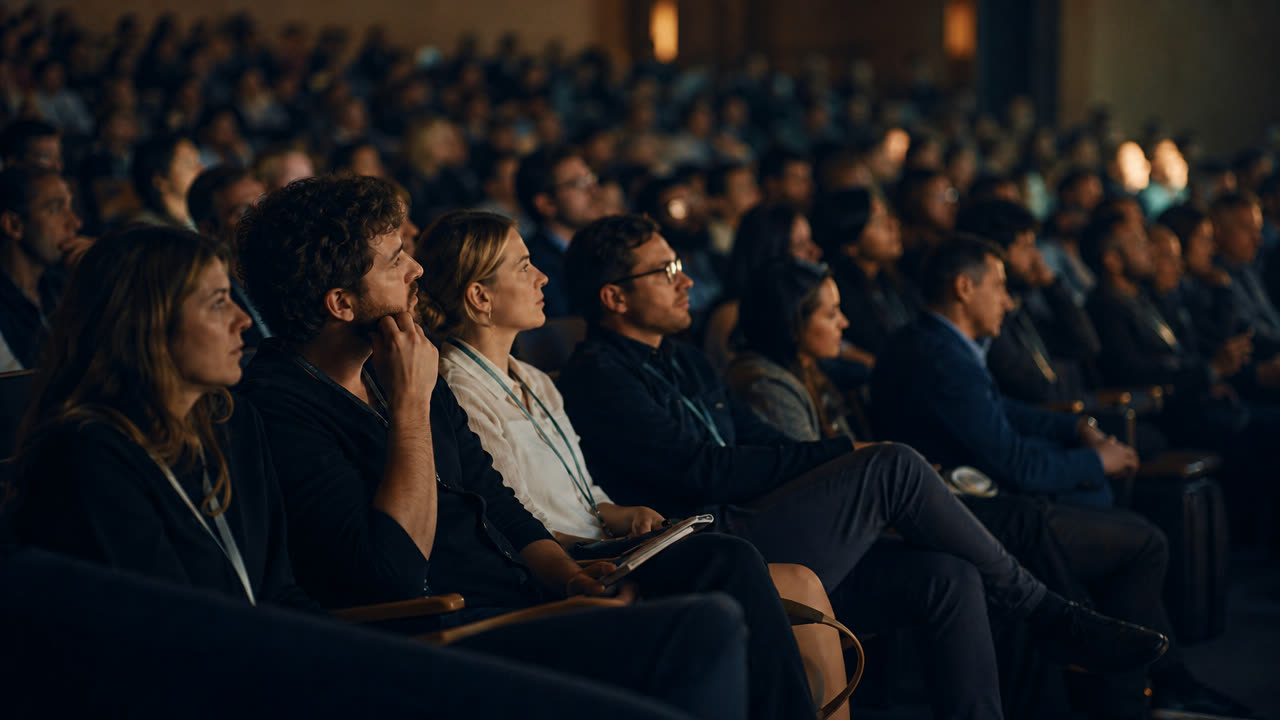
There's an attendee at every event. You've met them. Maybe you've been them.
They arrive on time. They wear the lanyard. They sit in the front row. They go to every session. They're attending in every observable way. And they leave the event without having a single meaningful conversation with another attendee.
Not because they didn't want to. Not because they're shy. Because they had no idea who, in a room of 500 strangers, was actually worth their time. The format gave them no way to find out.
This is the silent failure mode of event networking. The attendee shows up. The event happens around them. And the connection they came for never lands, because the matching layer was never built.
It's costing your event roughly 30-40% of its potential connection value. Most organizers don't see it, because the attendee doesn't complain. They just don't come back.
Here's exactly what's going wrong, who it's happening to, and how to design your event so every attendee can find the people who actually matter to them.
The "Who Do I Talk To?" Problem
§ 01 · DiagnosisPicture the room. 500 lanyards. Three of them are people who could change this attendee's career: a future co-founder, a hire, a customer. The attendee has roughly zero way to figure out which three.
So they default. They talk to people they already know. They corner the speaker after the panel. They stand by the coffee. They leave early. The room was full of value. The matching layer was missing.
Watch any networking break and you'll see the same five attendee types failing the discovery problem, every single time:
- The Already-Friends (22%)Talked to the three people they came with for two days.
- The Speaker-Cornerers (16%)Built their entire networking strategy around catching the speaker after the panel.
- The Coffee-Station Loiterers (28%)Best hope: someone strikes up a conversation in the queue.
- The List Stalkers (24%)Scrolled the attendee directory for 40 minutes the night before. Approached zero of them.
- The Early Leavers (10%)Booked a 4pm flight on day two. Knew.
None of these people are bad attendees. They're rational. The format gave them no way to find the right person, so they fell back on whatever didn't require figuring it out.

Here's the uncomfortable part: the right people are almost always already in the room. The investor your founder needed. The hire your recruiter needed. The customer your operator needed. They paid, they flew in, they wore the lanyard. And they stood twelve feet apart for two days without ever finding each other.
That's not bad luck. That's an event without a discovery layer.
Five reasons it breaks. A fix for each.
Reason 1: Attendee Lists Are Useless
§ 02 · Reason 01Most events publish a list of 500 names. Sometimes with a company. Sometimes with a job title. No filter, no rank, no search, no signal.
That's not a tool. That's a phonebook. You can't act on it. You can't even decide where to start. So most attendees don't.
A list is data. A directory is a tool. The two are not the same thing, and treating them like they are is the first reason your room never sorts itself out.
Replace the static list with a searchable, filterable directory. Filter by role, industry, intent, stage. Let attendees type "Series A SaaS founders looking for technical hires" and see the seven people in the room who match.
Discovery should take 30 seconds, not 40 minutes of scrolling at midnight.
Reason 2: Goals Aren't Visible
§ 02 · Reason 02Badges show what someone IS. Job title. Company. Maybe a logo. They never show what someone is LOOKING FOR.
A founder who's hiring and a senior marketer who's quietly looking for her next role can stand next to each other at the coffee station for twenty minutes and never find each other. Their badges are technically accurate. Their badges are also completely useless.
Intent is the most actionable signal at any event. It's also the one your format hides.
Capture stated goals during registration. "Looking to hire." "Looking to be hired." "Looking for customers." "Looking to learn." Then surface that intent on the badge, in the app, on the profile card.
When goals are visible, the right conversations start themselves.
Reason 3: Quiet Attendees Get No Signal
§ 02 · Reason 03Roughly 40% of attendees don't approach strangers. The same 40% also don't get approached. They're not less valuable. Some of them are the most valuable people in the room. They're just less visible.
The format rewards extroversion, not value. The loudest 20% works the room. The quietest 40% gets skipped twice: by the format, and then by everyone else, who reads "quiet" as "not interesting."
You hired them, you flew them in, you put them on the attendee list. And the event design then makes them invisible.
Use matchmaking to actively surface quiet attendees. Push the introverted senior researcher to the founder who'd benefit from her work, instead of waiting for one of them to do the cold approach neither will ever do.
The right person doesn't have to be the loud person. Your tooling decides which.
Reason 4: First-Time Attendees Have No Anchor
§ 02 · Reason 04Repeat attendees walk in with a network. They already know fifteen people from last year. The first hour is hugs and "let's grab coffee" and they're moving.
First-timers walk in with nothing. No anchors, no familiar faces, no shortcut into a conversation. They spend day one playing catch-up. Many of them never catch up. By the closing party, they've talked to maybe three people, two of whom were also first-timers also playing catch-up.
You lose them next year. Not because the content was bad. Because nobody knew them.
Buddy first-timers with a returning attendee or assign them to a cohort on arrival. Five people, same goals, meet on day one for thirty minutes. That's it. They now have an anchor for the rest of the event.
One designed introduction beats two days of trying to break in.
Reason 5: Casual Conversations Don't Reveal Fit Fast Enough
§ 02 · Reason 05A typical attendee-to-attendee conversation takes four to six minutes to surface whether the two people should even be talking. Role, focus, what they're working on, what they need. Six minutes of throat-clearing.
In a 30-minute break, that's four conversations. Most of the time is spent on discovery, basic context that could've been on a profile card before either of them said hello.
The good conversation, the one where both people lean in, usually starts at minute six. And then the break ends.
Pre-load discovery. Profiles, goals, current focus, what each side is looking for, all visible before the hello. The opening line is no longer "so, what do you do?" It's "I saw you're working on X, I'm doing Y, want ten minutes?"
Conversations start at minute six instead of ending there.
A "Who Do I Talk To?" Setup
§ 03 · The StackAfter watching organizers solve this across hundreds of events, the shape of a working discovery layer has crystallized. It looks like this:
- Profile-rich registration
Capture role, goals, and current focus at sign-up. Not just name and company. Capture the actual signal someone could match on.
- Searchable directory
Filterable by role, industry, intent, stage. Attendees can find the seven people who match what they're looking for in 30 seconds.
- AI-suggested matches
Two to five high-fit people surfaced per attendee, with the why included. The cold-approach decision is removed.
- Goal-visible badges or app cards
See at a glance what someone is working on and what they're looking for. Intent is no longer hidden under a job title.
- Cohort assignments
Especially for first-timers. Start them in a group of five with shared goals so they have an anchor before day one ends.
- In-app messaging
Lower the bar below "walk up and introduce yourself." A two-line note is a much smaller social ask than a cold approach across a ballroom.
Six pieces. None of them are exotic. All of them are missing from the average event.
"The biggest waste at any event isn't the budget. It's the attendees who showed up, paid the registration fee, took two days off work, and never had the conversation they came for."
Connection by Design, Vol. 06Where Hoogah Fits
§ 04 · HoogahHoogah is built around exactly this discovery layer. Rich attendee profiles at registration. AI matchmaking that surfaces two to five high-fit people per attendee. A searchable, filterable directory. In-app messaging. Cohort assignments for first-timers.
The quiet 40% no longer slip through. The first-timer has an anchor by the end of day one. The senior researcher who'd never cold-approach anyone gets surfaced to the three people who needed to meet her. The founder hiring and the marketer job-hunting actually find each other, instead of standing in the same coffee queue for two days.
You stop running an event where the right people happen to be in the same room. You start running an event where the right people actually find each other.
The Bottom Line
§ 05 · ConclusionAttendees don't fail at networking. The discovery layer fails them. Without a way to figure out who's worth their time, they default to whoever's closest, loudest, or already familiar, and the connection your event was supposed to deliver never lands.
The fix isn't more icebreakers, a bigger app budget, or another keynote on "the power of human connection." It's a system that makes the right person findable. Profile, directory, matchmaking, visible intent, cohort, in-app messaging. Six pieces. Boring to build. Devastating to skip.
The right people are already there. Make sure your attendees can find them.
- Cvent, Attendee Discovery Patterns 2026
- Eventbrite, Why First-Time Attendees Don't Return
- Harvard Business Review, The Hidden Cost of Bad Introductions