
The room had already decided.
It's the moment most organizers miss. You think networking begins at 9:01am, when the welcome coffee starts pouring and the lanyards come out. It doesn't. It began three weeks earlier, when the attendee list went live and the first few people started searching each other on LinkedIn at midnight.
By the time your guests walk into the venue, the room has already organized itself. The people who came in with names already in their phone are pulling each other aside before they've even hit the registration desk. The ones who didn't are standing in line for coffee.
Bizzabo's 2026 Event Insights report puts a number on it: 68% of attendees say their most valuable connection of the conference happened within the first hour. Yet most organizers spend zero budget, zero design effort, and zero technology on that hour. They spend it on day two.
That's not just a missed moment. It's the entire event compounding off a starting condition you never set.
Here's why pre-event networking is the lever almost no one is pulling. And how the smartest organizers in 2026 are designing it on purpose.
The 90 Seconds Before Your Event Ever Starts
§ 01 · DiagnosisLook at your attendee list the week before doors open. Watch the inbox replies, the LinkedIn requests, the calendar holds. You'll see the same five tribes form, every single time, before anyone has set foot on site:
- The Pre-Briefed (12%)Came in with three names already in their phone. Will walk past the welcome desk because they're already mid-conversation.
- The Hopefuls (28%)Bookmarked four speakers and one panel. Hoping they bump into them at the coffee break. They won't.
- The Stalkers (35%)Spent 40 minutes searching the attendee list on LinkedIn the night before. Will not approach a single person they found.
- The Drifters (20%)Haven't opened the event app since they registered six weeks ago. Will read the agenda in the back of the cab on day one.
- The Closers (5%)Already sent two Calendly links and confirmed three coffees. Will leave the event with eight meetings and an investor lead.
That's 95% of your room arriving with no plan, no shortlist, and no intro. You handed every attendee the same lanyard. But four out of five of them are starting the event from cold, when one in twenty already has the playbook open.
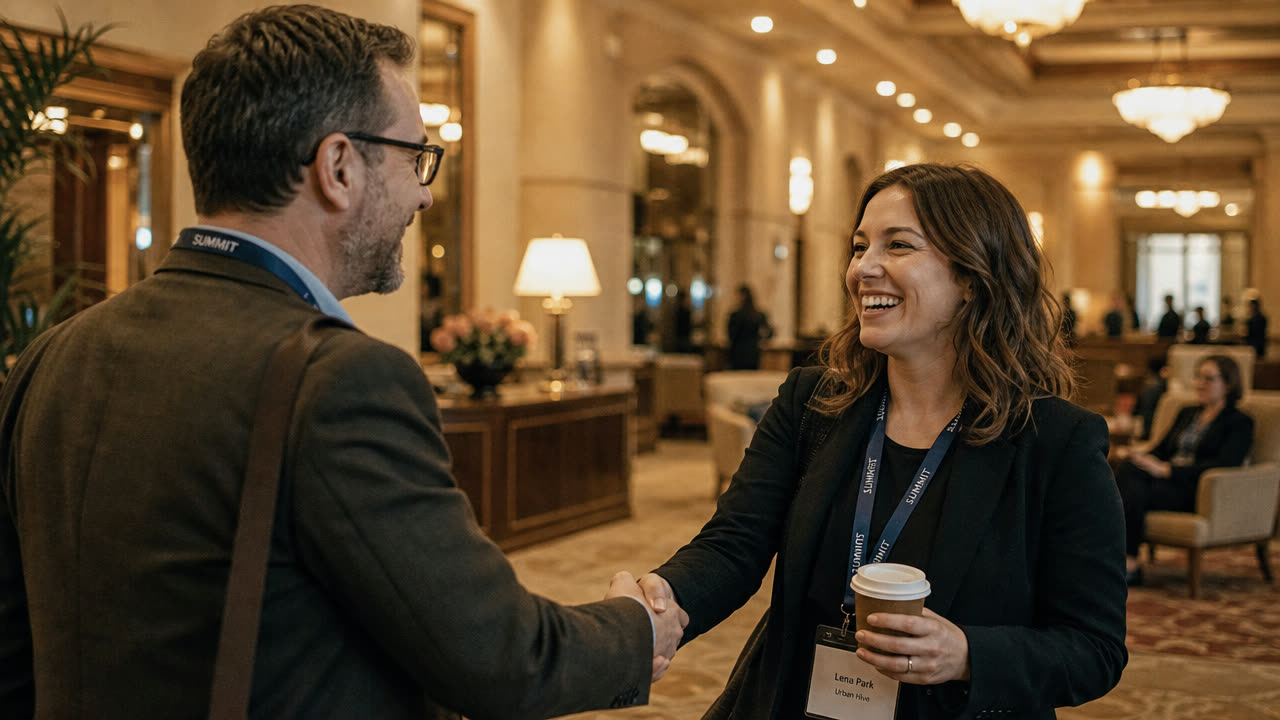
Here's the uncomfortable truth: pre-event networking is already happening at every event you run. You just aren't designing it. The 5% who run their own playbook are eating the room, and the other 95% are pretending the welcome reception is where it begins.
The good news is, you can move the line. You can start the event before the event starts. And once you do, day one stops being where networking begins. It becomes where networking pays off.
Five reasons most organizers leave the pre-event window on the floor, with a fix for each.
Reason 1: The First Hour Decides the Rest
§ 02 · Reason 01The most valuable connection of any event is almost always made in the first hour. And the first hour is almost always defined by who you arrived knowing.
An attendee who walks in with two names already in their head spends the morning compounding. They make one introduction, that person makes another, and by lunch they're three rings deep into the network. An attendee who walks in cold spends the morning scanning for someone to talk to. By lunch they've had one conversation.
The gap between those two attendees, by day three, is enormous. And it was decided before either of them showed up.
Send every attendee three pre-event match suggestions, with context, in the week before doors open. Not a 400-person directory. Not a generic "here's who's coming." Three people, with one sentence each on why they should meet.
That's the entire shift. You move the first hour from a lottery to a lineup.
Reason 2: Attendees Aren't Strangers. They're Un-Introduced.
§ 02 · Reason 02Two people on your attendee list are working on the same problem. They're geographically close. They have one mutual contact. They'd be each other's best meeting of the year.
They will never meet. Not because they don't want to. Because no one introduced them.
Cold approach at the venue isn't the bar that filters good matches from bad ones. It's the bar that filters extroverts from everyone else. You're not pre-qualifying conversation quality. You're pre-qualifying personality type.
Stop treating attendees as strangers who happen to be in the same room. Treat them as a network you have the privilege to introduce. Pre-event email: "You should meet [Name]. Both of you are working on [X]. They'd value 20 minutes."
That sentence does more for connection quality than any breakout you'll design on the day.
Reason 3: Intent Beats Improvisation
§ 02 · Reason 03"Let's grab coffee on the floor" is the most common networking commitment made at events. It is also the most reliably broken one.
Coffee at 11am between two breakouts requires both people to remember, both to be in the same place, both to not get pulled into a hallway conversation, and both to actually have 20 minutes. The hit rate is, generously, one in five.
A meeting at 9am, on a calendar, with both parties already knowing why it's happening, has a hit rate close to one in one. The same conversation. Massively different odds of it actually occurring.
Make the calendar the venue. Once a match is proposed pre-event, give both sides a one-click scheduling option that turns intent into a calendar block before they've even printed their boarding pass.
Stop hoping it happens at coffee. Put it on the calendar.
Reason 4: Your Sponsors Are Paying For Access They Aren't Getting
§ 02 · Reason 04Sponsors don't write you a six-figure cheque for a logo on a step-and-repeat. They're paying for access to the room. The unsaid agreement is that they'll meet 15 to 30 of the right buyers across three days.
What actually happens: their reps stand at the booth for nine hours and pitch whoever walks by. Half the booth visits are competitors. Most of the rest are job-seekers.
The pre-event window is the highest-leverage hour your sponsors will ever get. And almost no event programmes it for them.
Give every sponsor a curated pre-event match list a week before doors. Five to ten attendees they're a clean fit for, with intros offered. Let them book three of those in advance.
Sponsors stop pitching. They start meeting. Their renewal next year stops being a debate.
Reason 5: The Event App Most Organizers Ship Is a Directory, Not a Tool
§ 02 · Reason 05Open the app you shipped last year. You'll see a list of attendees. Probably searchable. Probably with a tiny chat function nobody used.
A list of names is not networking. It's the same problem the venue floor has, just on a smaller screen. The attendee still has to identify, approach, and convert. Three steps, each with its own failure point.
The job of pre-event tech isn't to display the room. It's to navigate it. Suggest, schedule, brief, follow up. If your app does the first one and nothing else, you've shipped a phonebook.
Replace the directory with a workflow. Profile capture, then match logic, suggested intros, in-app scheduling, a pre-event briefing, and post-event follow-up. Same database. Completely different product.
The directory tells the attendee who's here. The workflow tells them what to do about it.
The 2026 Pre-Event Stack
§ 03 · The StackHere's the pre-event networking architecture the best organizers of 2026 are running. Same six layers every time. Different industries, different sizes, same shape.
- Intent capture at registration
Beyond name and title. What are you working on? Who do you want to meet? What does a successful event look like for you? Three fields, five minutes, the entire match engine downstream depends on it.
- Match logic that ranks by goal, not industry
"You're both in fintech" is not a match. "You're both raising in Q3, and one of you has done it twice already" is.
- The seven-day-out intro email
Three named people. One sentence each on why. A scheduling button. Sent the Tuesday before. Read on the flight in.
- One-click in-app scheduling
The intro is half the work. Booking it is the other half. Don't separate them into two apps and two decisions.
- The pre-event briefing room
A 30-minute virtual session, two days out, grouped by cohort. Lowers the activation energy of every conversation that happens on site.
- A live attendee list that updates as goals shift
People register six weeks out and arrive as a slightly different person. The match engine should reflect that.
None of this is theoretical. It's the stack that runs underneath the best summits, the best founder gatherings, and the best corporate offsites of 2026. It is also, almost certainly, not running underneath yours.
"The hour before the event starts is the hour that decides the event. The organizers who own that hour own the connection. The ones who don't are renting a venue and hoping."
Connection by Design, Vol. 02Where Hoogah Fits
§ 04 · HoogahHoogah was built to open the room before the venue does.
Attendees fill out a 90-second intent profile during registration. The match layer ranks the room by goal, not industry. A week before doors, every attendee gets three high-fit suggestions with context. One-click scheduling turns intent into calendar holds. By the time your guests land, the first three meetings of their event are already booked.
You stop hoping the room sorts itself. The room arrives already sorted. The first hour of your event stops being a lottery. And every hour after it compounds.
The Bottom Line
§ 05 · ConclusionNetworking at events doesn't begin when the doors open. It begins the week your attendee list goes live. The 5% who already know that are eating the room. The other 95% are showing up cold to an event the smartest people have already started.
The shift is small. Move the work earlier. Match the room before it walks in. Put the first meeting on the calendar before the flight. The event itself becomes the payoff, not the setup.
If your last event ended with attendees saying "the keynote was great, but I wish I'd met more people," the fix isn't a bigger venue or a longer cocktail hour. It's a Tuesday email, sent the week before. Once you ship one, the question stops being "did people connect" and starts being "how many connections do we want to design this year."
- Bizzabo, Event Insights 2026: The Pre-Event Window
- Eventbrite, Why First-Hour Connections Drive Repeat Attendance
- Harvard Business Review, The Hidden Cost of Cold Introductions