
Every organizer has had this conversation.
The keynote crushed it. Breakouts were full. The food was actually good. And then someone, usually the CMO, sometimes the sponsor lead, leans over and asks, "How was networking?"
And the room goes quiet.
Networking is the one thing every attendee says they want, and the one thing most events fail to deliver. Eventbrite's data has consistently shown that ~76% of professionals rank networking as a top reason for attending in person. Yet the same people, in post-event surveys, rate it as the worst part of the experience.
Read that again. The thing they came for is the thing they're most disappointed by.
That's not an attendee problem. That's a design problem. And the good news? It's a fixable one.
Here's exactly what's going wrong at your networking sessions. And how the smartest organizers in 2026 are designing networking that actually works.
What's Really Happening at Your "Networking Session"
§ 01 · DiagnosisStand at the back of any networking break. Watch what unfolds in the first 90 seconds. You'll see the same five tribes form, every single time:
- The Cluster (20%)People who already know each other, locking eyes across the room and forming a closed circle within ten seconds.
- The Plus-Ones (30%)Attendees who came with colleagues and aren't going more than three feet from them.
- The Phone Scrollers (40%)Solo attendees pretending to check email because anything is less awkward than approaching a stranger.
- The Hunters (10%)Confident extroverts working the room, often selling something.
- YouAt the back, watching, wondering why no one looks like they're having a good time.
That's it. That's the session. You handed 500 people a 45-minute window labelled networking. But what you actually did was leave 90% of them to fend for themselves.
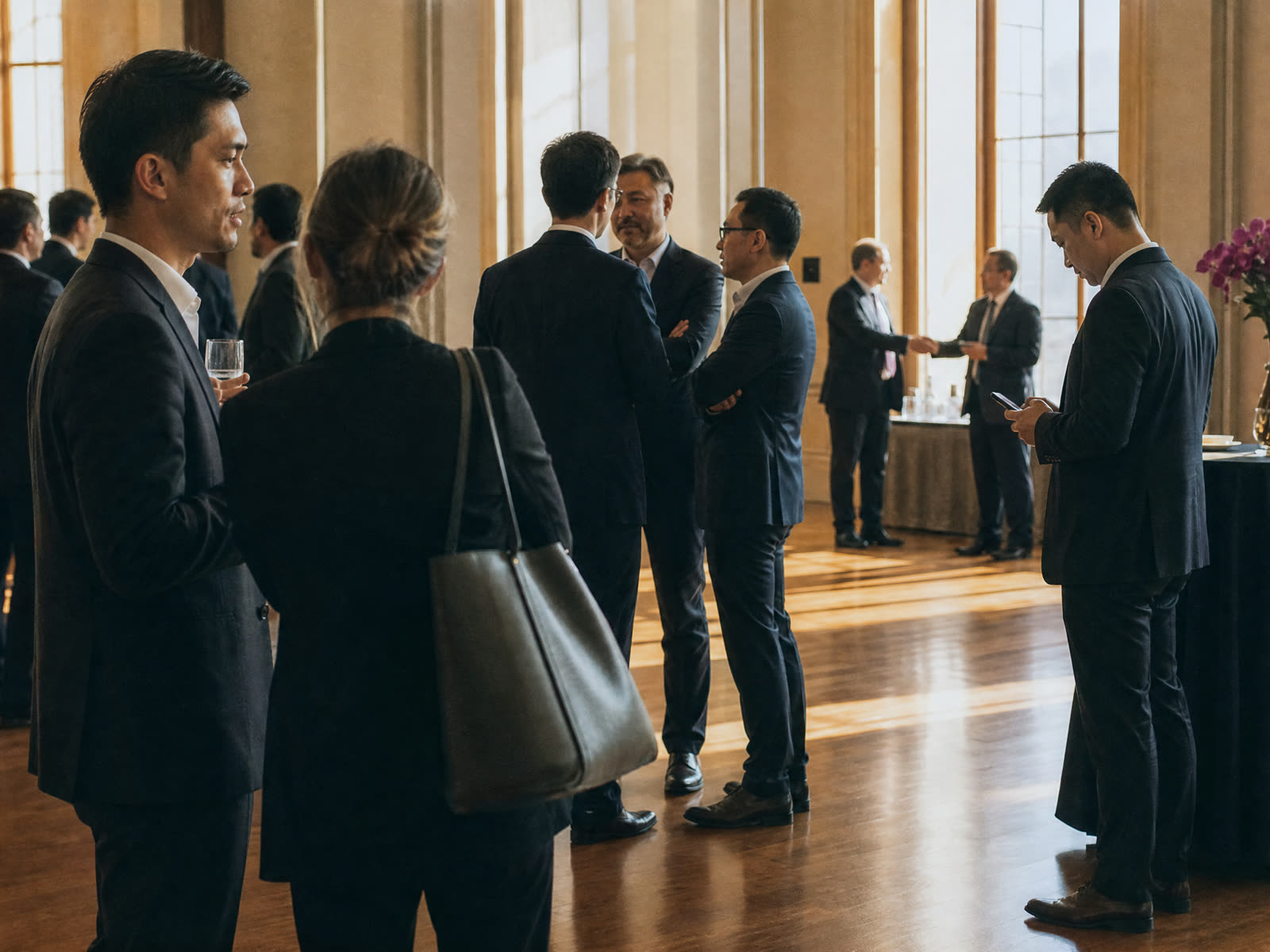
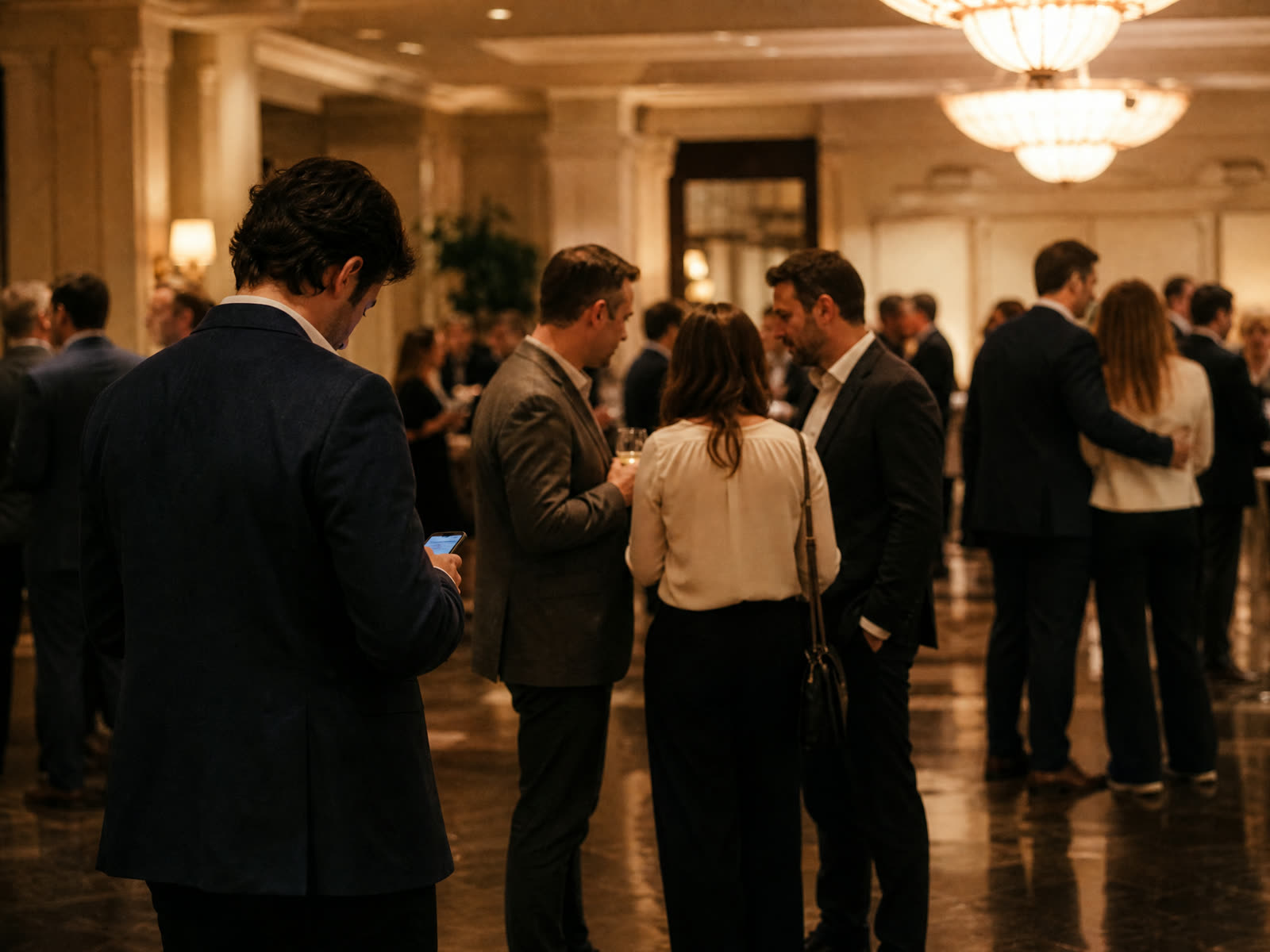
Here's the uncomfortable truth: the cocktail-hour-with-name-tags model assumes attendees know how to network. They don't. Most are nervous, drained from sessions, and have no idea who in the room is actually worth their time. So they default to the path of least resistance: scroll, refill coffee, leave early, complain about it on the survey.
If that sounds like your last event, you're not alone. You're just running the same broken format everyone else is.
Let's break down why it breaks. Five reasons, with a fix for each.
Reason 1: You're Asking Strangers to Approach Strangers
§ 02 · Reason 01Cold approach is the highest-friction social behaviour we ask of professionals. Think about it: we don't ask this of anyone, anywhere else.
Not at work (you wait for an intro). Not online (you DM someone you already follow). Not even on dating apps, where the entire UX is built around making "hello" easier.
But at events? We hand someone a lanyard, point at a room of strangers, and expect them to walk up and spark a meaningful conversation. Most can't. The ones who can are usually selling something, and your attendees know it.
Take cold approach off the table entirely. Pre-match attendees to 2-3 highly relevant people before the event starts. The first conversation is no longer with a stranger. It's with someone they were told to meet, with context on why.
That single shift turns "networking" from an audition into an introduction.
Reason 2: There's No Reason to Talk
§ 02 · Reason 02"Networking" is too vague to act on. Talk to whom? About what? Toward what outcome?
Without a frame, attendees default to the lowest-resolution opener in the English language: "So, what do you do?" And the conversation stalls within two minutes.
Real connection requires context. A shared problem. A complementary skill. A topic both people have already flagged as interesting. Without that, you don't get connection. You get small talk and business cards that go straight in the bin on the flight home.
Give every interaction a why. Topic-based roundtables instead of open mingling. Speed-networking matched on stated interests. Pre-event introductions framed as "You should meet because you're both working on X."
When the why is clear, attendees stop performing networking and start actually doing it.
Reason 3: The Room Is Working Against You
§ 02 · Reason 03A noisy ballroom, a drink in one hand, a plate in the other. This is, genuinely, one of the worst environments humans have ever invented for conversation.
You can't hear. You can't sit. Half the people are mid-bite. The acoustics turn every chat into shouting.
If your reception feels low-energy, look at the room before blaming the attendees. The format is broadcasting "this is a hard place to talk," and your guests are obeying it.
Design the space for conversation. Smaller breakout rooms. Lounge seating. Walk-and-talks. Acoustic zones with sound dampening. Even tiny adjustments (round tables of 6 instead of long banquet rows, a coffee bar instead of a buffet line) shift the energy completely.
Your environment is a script. Make sure it's the one you want attendees to follow.
Reason 4: You're Mixing Cohorts That Shouldn't Mix
§ 02 · Reason 04If your event spans founders, junior marketers, investors, and academic researchers, dropping them into one undifferentiated "networking hour" guarantees nothing useful happens.
Founders want investors. Marketers want peers. Researchers want collaborators. Investors want deal flow. One pool means none of them find each other efficiently. They all swim through the same crowd, hoping to bump into the right person.
Spoiler: most won't.
Segment networking by role, goal, or stage. Even simple cuts ("looking to hire," "looking to be hired," "looking to learn," "looking to invest") dramatically increase the chance any given conversation lands.
Less Tinder for everyone. More Hinge for the right matches.
Reason 5: Connection Doesn't End When the Session Does
§ 02 · Reason 05Here's the failure that happens after the event. And it's the biggest one.
Two attendees have a great conversation on Wednesday. They exchange contacts. They both genuinely intend to follow up. Wednesday night they're flying home. Thursday is back-to-back catch-up. Friday the inbox swallows them. By Monday, the connection is gone.
Most of what attendees call "the value of networking" actually evaporates in the 72 hours after the event. The conversation happens. And then nothing. By the time your post-event NPS survey lands, the moment has passed.
Build the follow-up into the event itself. Auto-saved contacts. AI-generated meeting recaps with the next step pre-drafted. A 7-day post-event nudge: "You met Priya. Here's the thing she said she'd send you. Want a reminder to reach out?"
Connection isn't an event. It's the start of one. Treat it that way.
What Actually Works: The 2026 Networking Stack
§ 03 · The StackAfter watching organizers solve this across hundreds of events, the playbook has crystallized. Networking that actually works includes:
- Pre-event matchmaking
Attendees fill out a short profile (role, goals, current focus) and get 2-3 suggested connections before they board the plane.
- Designed first contact
The first interaction isn't cold approach. It's a scheduled coffee, a curated roundtable seat, or a structured intro.
- Topic-segmented spaces
Networking time is broken into themed rooms or tables, not a free-for-all.
- Frictionless contact exchange
No fumbling for cards. Tap-to-share, in-app saving, auto-generated recap notes.
- Post-event continuity
A 1-week and 30-day loop that keeps the connection warm and surfaces what each side promised.
- Measurable outcomes
You can show, in numbers, how many meaningful connections happened. Not just "attendees liked it." Actual matched meetings, follow-ups sent, intros made.
This isn't theory. It's how the best summits, corporate offsites, and community events of 2026 are running networking right now.
"The organizers who'll win the next decade aren't the ones with the biggest budgets. They're the ones treating networking as a product to design, and using the right stack to design it."
Connection by Design, Vol. 01Where Hoogah Fits
§ 04 · HoogahHoogah is built around exactly this stack.
It's an end-to-end networking layer for organizers: pre-event attendee profiles, AI-driven matchmaking, curated on-site introductions, frictionless contact exchange, and a post-event follow-up loop, all in one platform. No more hoping the room sorts itself out. No more relying on the 10% of extroverts to carry the energy.
You ship designed networking. Attendees walk out with relationships, not just business cards. And next year, they sign up the second registration opens.
The Bottom Line
§ 05 · ConclusionNetworking at events fails by default, not because attendees aren't trying, but because the format isn't designed to help them succeed.
The events that win in 2026 will be the ones that treat networking as a product to design, not a vibe to hope for. Pre-match. Structure. Segment. Follow through. Measure.
If your last networking session ended in phone scrollers and quiet hallways, the fix isn't a bigger room or louder music. It's a system. And once you have one, "How was networking?" stops being the awkward question at the debrief, and starts being the part of the event everyone brags about.
- Eventbrite, Pulse Report: What Attendees Actually Want From Events
- Harvard Business Review, The Limits of Networking
- Bizzabo, State of In-Person Events 2026