
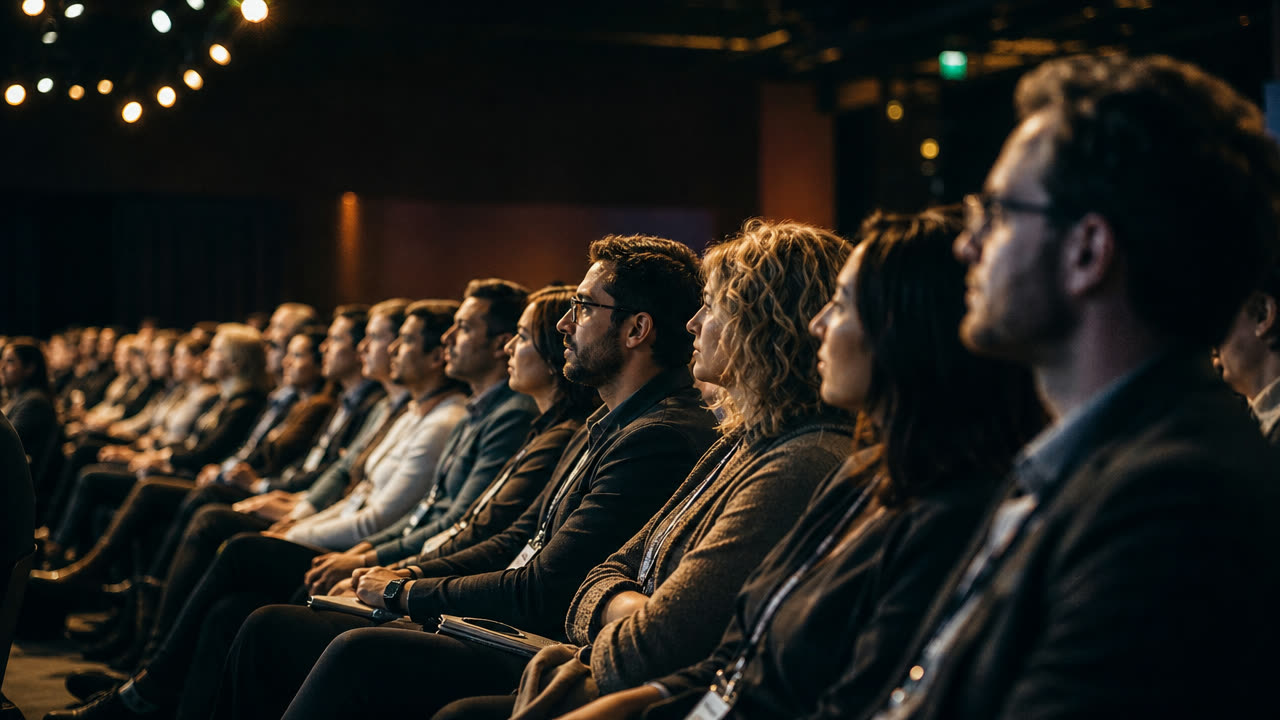
There's a specific kind of silence that only happens at networking events.
The host says, "Alright everyone, take the next 30 minutes to network!" and the energy in the room drops by half. People shuffle. They check their phones. The brave 10% start moving. Everyone else stands frozen, holding a glass of warm white wine, hoping someone approaches them so they don't have to make the first move.
That awkward 30 seconds is the entire problem with how most events facilitate networking.
Networking doesn't have to feel forced. It feels forced because organizers default to formats that maximize friction, and then wonder why attendees don't seem to enjoy themselves.
The events that get this right in 2026 aren't run by more charismatic hosts. They're run by organizers who treat the first 90 seconds as something to design, not something to hope for.
Here's why traditional networking feels awkward, even when everyone is polite. And the structural fixes that quietly turn a frozen room into a warm one.
Why Traditional Networking Feels Awkward (Even When Everyone Is Polite)
§ 01 · DiagnosisThree things happen at the same time, every time the host says "go network":
First, people are told to do something they don't know how to do. "Network" isn't an instruction, it's a goal. Without structure, attendees have no script.
Second, the social rules are unclear. Can I interrupt that group of three? How long is too long? When is it polite to leave? Nobody knows, so everyone hedges.
Third, the stakes feel high. Every conversation is a tiny audition. Both people silently calculate whether the other is worth their time.
Stand at the back of any reception and watch the first 90 seconds. You'll see the same five attendee tribes form, frozen in the room, every single time:
- The Frozen Watchers (35%)Standing still, eyes scanning, waiting for someone to approach them so they don't have to make the first move.
- The Phone Defenders (28%)Mid-fake-email, looking deeply busy, building a small wall of screen between themselves and the room.
- The Hover-Joiners (17%)Drifting toward a group of three, standing one step too far back, never quite breaking in.
- The Speaker-Cornerers (12%)Locked onto the keynote speaker or the loudest person, refusing to let go because at least they know who that is.
- The 10% MoversThe confident few actually working the room. Usually selling something. Your attendees can tell.
That's the session. You handed 500 people a window labelled networking. What you actually did was leave 90% of them to fend for themselves, with no script, no rules, and no way out.
Here's the uncomfortable truth: the open-bar-with-name-tags model assumes attendees know how to network. Most don't. They're nervous, drained from sessions, and unsure who in the room is even worth approaching.
Awkwardness isn't a personality trait of your guests. It's the default output of a format with no design.
Five reasons it goes wrong. A fix for each.
Reason 1: Open Networking Is a Vacuum, Not a Format
§ 02 · Reason 01"Open networking" sounds friendly on the agenda. In practice it's the absence of an agenda.
You haven't given attendees a structure. You've removed one. There's no rotation, no prompt, no time limit, no role for anyone in the room to play. Just a window of empty time and a soft expectation that they'll fill it well.
People don't relax into a vacuum. They hedge. They scroll. They form a tight circle with the colleague they came in with and wait for it to end.
Replace open networking with a format. Speed-networking rounds. Topic tables with a host at each. A rotation structure that moves people every 8 minutes. Even a single prompt on the screen ("Find someone working on a different stage than you") beats an empty window.
Format doesn't make networking less authentic. It makes it possible.
Reason 2: People Don't Know Who They're Allowed to Talk To
§ 02 · Reason 02Look around any reception and you'll see groups of three or four, standing tight, backs slightly turned out. That stance isn't accidental. It's a signal: closed.
Your other attendees read that signal correctly. So they don't approach. They hover, glance, and drift away. The room ends up sorted into closed clusters, and the gaps between clusters fill with phone-scrollers.
Nobody knows who's open. Nobody knows whether the person standing alone wants company or just needs a minute. So everyone hedges, and the room stays cold.
Make openness visible. A coloured lanyard for "open to introductions." A profile card on every attendee that shows what they're here for. A facilitator who literally walks people across the room and hands them off.
Signal beats hope. Don't leave your guests guessing whether they're welcome.
Reason 3: There's No "Out" From a Bad Conversation
§ 02 · Reason 03Half of why people freeze before approaching a stranger isn't fear of the opener. It's fear of the close.
If the conversation is bad, how do I get out without being rude? If it's fine but I want to meet someone else, how do I leave without making them feel rejected? Nobody knows. So they don't start. Better to scroll than to get stuck.
The bad-conversation tax is one of the most underrated reasons open networking fails. Your attendees have done the math. They're protecting themselves.
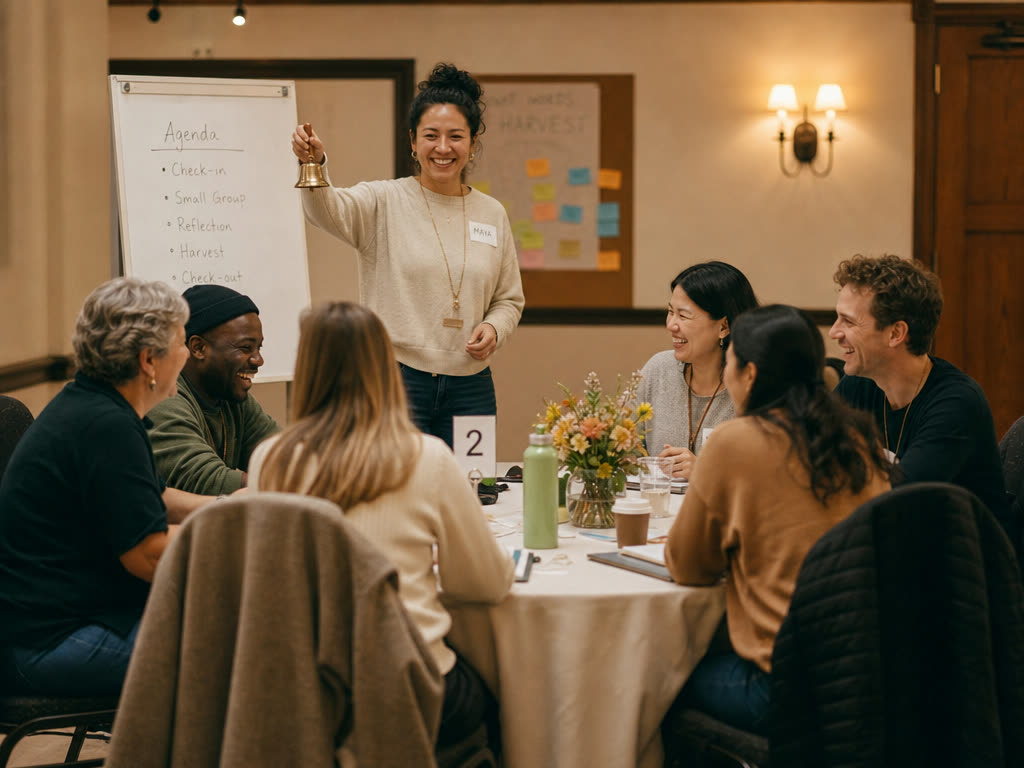
Build in exits. Bells every 8 minutes. Timer-driven rotations. A facilitator who calls "switch" out loud. Even a card on the table that reads "you can move whenever you like" gives people permission.
A graceful exit doesn't end the conversation. It makes the next one possible.
Reason 4: There's No Warm-Up
§ 02 · Reason 04Most networking sessions launch attendees from cold to deep in one move. The keynote ends, the lights come up, and suddenly you're supposed to walk over to a stranger and have something meaningful to say.
That's not a conversation. That's a cliff. Most people will not jump off it. The ones who do are usually the same 10% who'd be confident anywhere.
Conversations need a warm-up the same way muscles do. Skip it and the room locks up.
Open every networking block with 5 minutes of low-stakes talk. A two-question icebreaker at each table. A "stand up, find someone whose name starts with the same letter as yours" prompt. A shared moment of laughter before anything serious is asked of anyone.
The first 5 minutes set the temperature for the next 45. Don't skip them.
Reason 5: The Facilitator Is Missing
§ 02 · Reason 05Every great dinner party has a host. Someone who decides when to call people to the table, who makes the introductions, who notices the person standing alone and brings them in.
Most networking sessions don't. The MC says "have a great time" and walks off stage. From that moment on, the room has no one in charge of how connection actually happens.
Leaderless rooms drift toward the safest possible behaviour. And the safest possible behaviour is doing nothing.
Assign a facilitator. Not a moderator, not a panelist, not the keynote speaker. Someone whose only job is to run the room: kick off the format, call the rotations, walk lone attendees into groups, end on time.
A networking session without a host is just a room. Add a host and it becomes an event.
An Awkwardness-Free Setup
§ 03 · The StackNone of these fixes are exotic. The organizers running the best networking sessions in 2026 use a stack that looks roughly like this:
- Pre-set context
Every attendee has a profile filled out before they arrive. Every profile is visible in the room. Strangers stop being strangers.
- Structured formats
Speed-networking, topic tables, rotation rounds. The default isn't open. The default is a frame.
- Pre-matched intros
Two or three high-fit connections suggested before the event starts. The first conversation is no longer cold.
- A facilitator
Someone runs the room. Kicks off the format. Calls the rotations. Notices who's standing alone and folds them in.
- Built-in exits
Bells, timers, rotations. Nobody has to invent a graceful escape. The format gives them one every few minutes.
- A warm-up moment
Five minutes of low-stakes talk before anything real is asked of anyone. The room loosens before it deepens.
Each one is small. Together they remove the friction that was causing the freeze.
"Awkwardness is a design choice. The organizers who design it out aren't more charismatic. They're more structured."
Connection by Design, Vol. 03Where Hoogah Fits
§ 04 · HoogahHoogah is built to give organizers this stack out of the box. Pre-event matchmaking surfaces 2-3 high-fit people for every attendee before they arrive, so the first conversation is never with a stranger.
In-app profiles make openness visible. Attendees can see who's at the event, what they're working on, and who they've been matched with. The hidden signal becomes an obvious one.
On-site, the platform powers structured rotations and topic tables, with built-in timers and a clear path between rounds. After the event, the follow-up loop nudges both sides toward the next step, so the connection doesn't evaporate on the flight home.
The Bottom Line
§ 05 · ConclusionAwkwardness at networking events isn't caused by your attendees. It's caused by the format you handed them. The vacuum, the missing signal, the absent host, the cold start, the lack of exit.
Fix the format and the awkwardness goes with it. Not because the room is suddenly full of extroverts, but because every person in it finally has a script, a host, a reason, and a way out.
Awkwardness is a design choice. Make a different one.
- MeetingsNet, 2026 Networking Format Trends Report
- Cvent, State of Attendee Engagement
- Harvard Business Review, Designing Conversations That Connect