

Most networking depends on chance encounters.
You put three hundred people in a room, give them ninety minutes and a drinks table, and hope the right two find each other. Sometimes they do. Usually they do not, and everyone goes home with a stack of cards belonging to people they will never contact.
The problem was never the number of people in the room. It was that nobody knew which ones mattered.
Volume Is the Wrong Metric for Networking
§ 01 · DiagnosisAsk an attendee how networking went and they will often answer with a count. Ten new contacts. Twenty cards. A full camera roll of badges. None of that tells you whether anything useful happened.
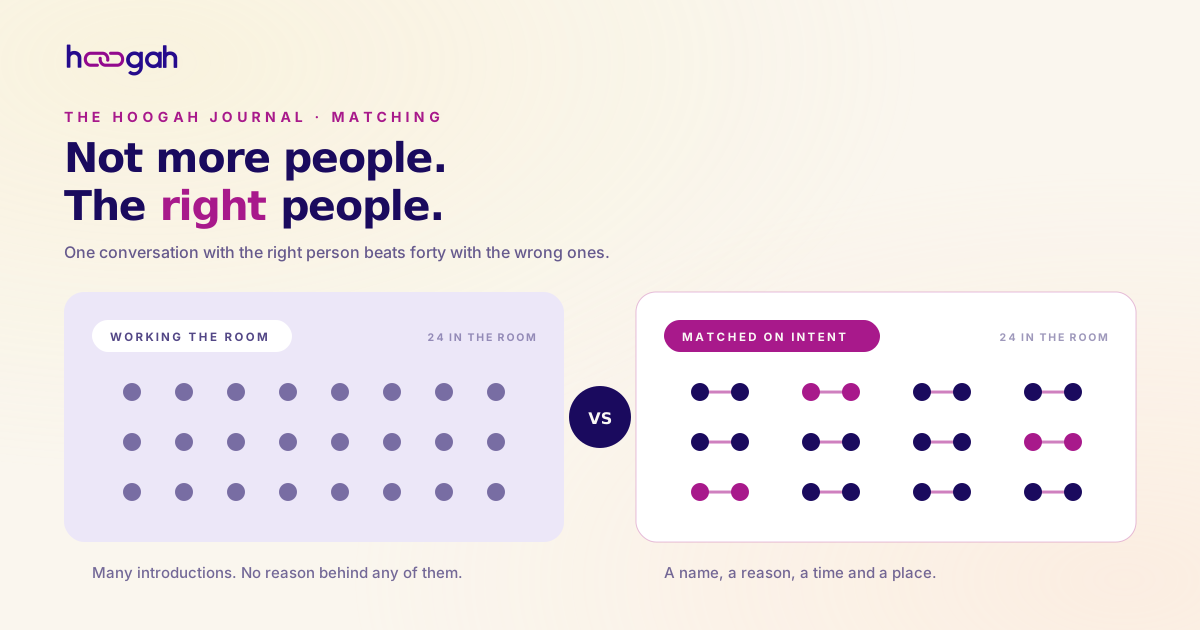
Counting introductions rewards the wrong behaviour. It pushes people to work the room quickly rather than talk properly, and it leaves the quieter half of your audience out entirely. Here is what a volume mindset actually produces:
- Short, repetitive conversations that never get past job titles
- Confident extroverts collecting contacts while everyone else stands still
- Attendees who met many people and remember none of them
- Follow-up rates that collapse within a week of the event
One conversation with the right person is worth forty with the wrong ones. That is the whole argument for attendee matching.
What Event Matchmaking Actually Does
§ 02 · The MechanicEvent matchmaking replaces chance with intent. Instead of hoping proximity does the work, you find out what each attendee came for and then put the two people who need each other in the same place at the same time.
The mechanics are simple. Attendees answer a short set of questions before or on arrival, covering what they do, what they are looking for, and what they can offer. That produces a picture of the room that no seating plan or badge colour could give you. From there, introductions become specific rather than general:
- A named person
Not a room to work.
- A stated reason
Both sides know why this conversation is worth having.
- A time and a place
Which removes the hardest part of approaching a stranger.
- A format that fits
A one-on-one, a small huddle, or a community station.
This is not a new idea. Researchers have long described how value moves through networks via interpersonal ties, and the consistent finding is that the useful connections tend to be the ones outside your existing circle. Matchmaking simply makes those connections findable inside a few hours.
Why the Right Introduction Changes the Conversation
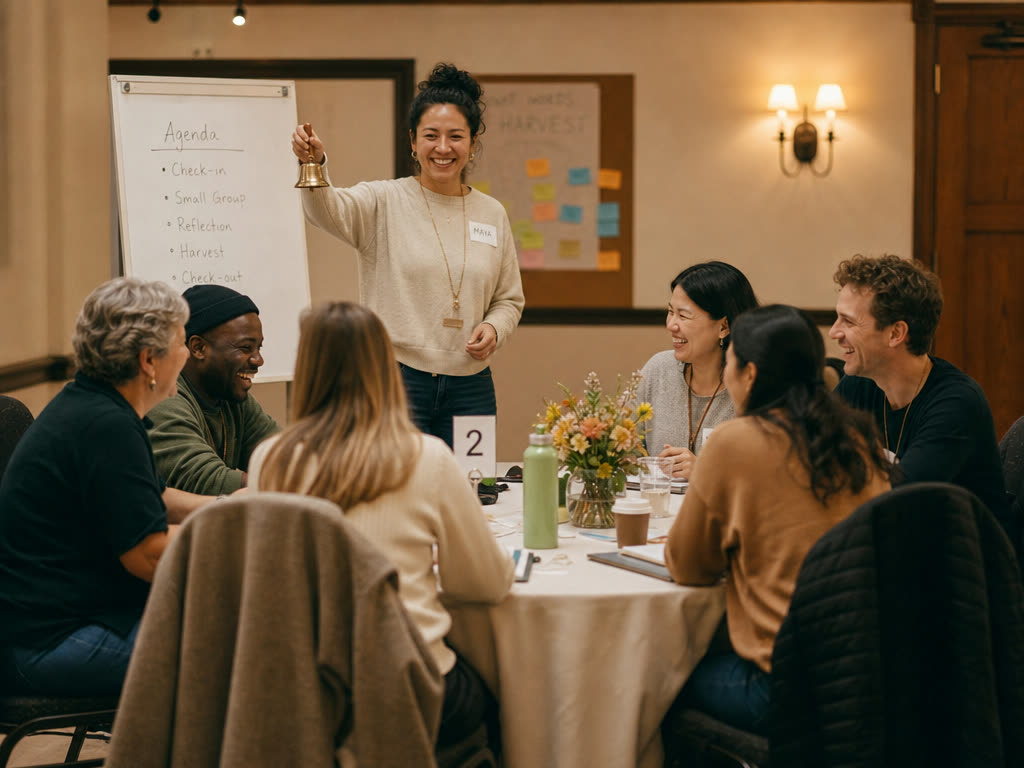
§ 03 · The EffectA conversation that begins with a reason skips the part everyone dreads. There is no opening small talk, no scanning for an exit, no working out whether this person is relevant. Both people already know why they are standing there.
What that does to the quality of the room:
- Depth arrives faster
The first two minutes are not spent qualifying each other.
- Quiet attendees participate
They no longer have to interrupt a stranger to be included.
- Outcomes get specific
Moving from pleasant to a hire, a client, a partner, or an investor.
- Follow-up actually happens
There is a shared reason to continue.
Attendees stop describing your event as a good day out and start describing it as the place where something happened for them.
"More people in the room was never the goal. The right two people in the same conversation always was."
Connection by Design, Vol. 01Why This Changes the Whole Event
§ 05 · HoogahThis is where Hoogah fits. You set up your matching questions in under ten minutes from any browser, attendees answer in about ninety seconds, and Hoogah works out who should meet whom, then gives each pairing a time and a place. You can see the full flow on how it works, and the formats it runs across on use cases.
When the right people meet on purpose:
- Attendees leave with a small number of connections that matter, not a large number that do not
- The quiet majority gets as much value as the loud minority
- Sponsors see conversations with intent behind them rather than a crowded floor
- You get proof that networking happened instead of hoping it did
More people in the room was never the goal. The right two people in the same conversation always was.
For the mechanics of how that pairing is actually built, from signup questions through to ranked introductions, see how event matchmaking helps attendees meet the right people.
Frequently Asked Questions
§ 06 · FAQWhat is event matchmaking?
It is the practice of using what attendees tell you about their goals to create specific introductions, rather than leaving networking to chance encounters during a break.
How does attendee matching work in practice?
Attendees answer a short set of questions before or on arrival. Those answers are used to pair people whose goals line up, and each pairing gets a reason, a time and a place to meet.
Isn't open networking enough for a small event?
Small rooms suffer the same problem in a quieter way. Fewer people means fewer chances of the right match happening by accident, so structure often matters more, not less.
Does this help attendees who find networking difficult?
Yes, and they usually benefit most. A named introduction with a stated reason removes the hardest part of the interaction, which is approaching a stranger without a pretext.
How long does setup take for an organizer?
Under ten minutes from any browser. You write the matching questions before the event and Hoogah handles the pairing once attendees answer.
- Interpersonal ties, on how loose connections carry new opportunity